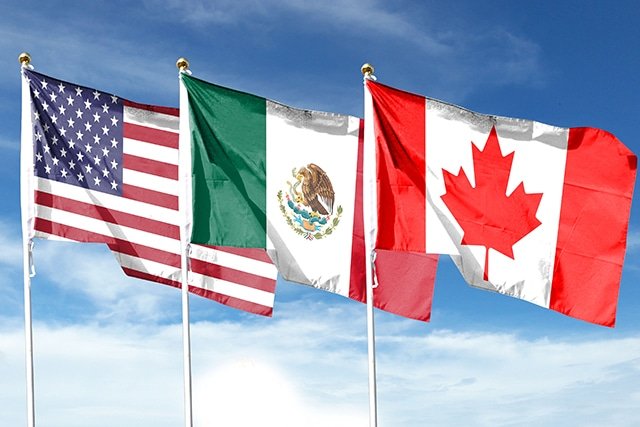
In 2020, the United States–Mexico–Canada Agreement (USMCA) replaced the North American Free Trade Agreement (NAFTA). This change generated uncertainty among manufacturers regarding the future of regional trade. Five years later, the results show that the USMCA has not only preserved cross-border trade but has also strengthened North America’s competitiveness as one of the most important manufacturing regions in the world.
NAFTA laid the foundation for trade integration for decades; however, technological advances, digital commerce, and automation made an update necessary. The USMCA was designed to respond to these new realities by incorporating chapters on digital trade, intellectual property protection, and labor reforms.
This modern approach has allowed companies—especially U.S. firms operating in Mexico—to gain greater certainty to invest, expand exports, and strengthen cross-border partnerships.
One of the USMCA’s greatest contributions has been reinforcing supply chains within North America. The agreement encourages regional production, reducing dependence on distant suppliers and increasing resilience to global crises such as the COVID-19 pandemic.
Nearshoring in Mexico has been boosted by updated rules of origin and the elimination of tariffs for most goods. In 2024, trade between the United States and Mexico reached record levels, demonstrating the treaty’s positive impact on regional economic integration.
One of the main criticisms of NAFTA was its lack of attention to labor rights. The USMCA addressed this issue by strengthening labor standards and implementing reforms in Mexico.
The use of the Rapid Response Mechanism has demonstrated increased oversight of labor compliance, creating a fairer environment for workers and reducing reputational risks for companies, while promoting more ethical and sustainable supply chains.
The agreement also introduced measures to streamline customs processes and improve transparency in trade. These actions aim to reduce border delays, lower costs, and prevent disruptions in production—key factors for maintaining the region’s competitiveness.
The USMCA has proven to be an effective trade agreement adapted to the needs of the 21st century. Beyond preserving trade among Mexico, the United States, and Canada, it has strengthened supply chains, raised labor standards, and modernized the rules of regional commerce. Overall, the agreement has consolidated North America as an integrated, competitive production platform prepared to face the challenges of the global economy.
Source: NAPS Intl.