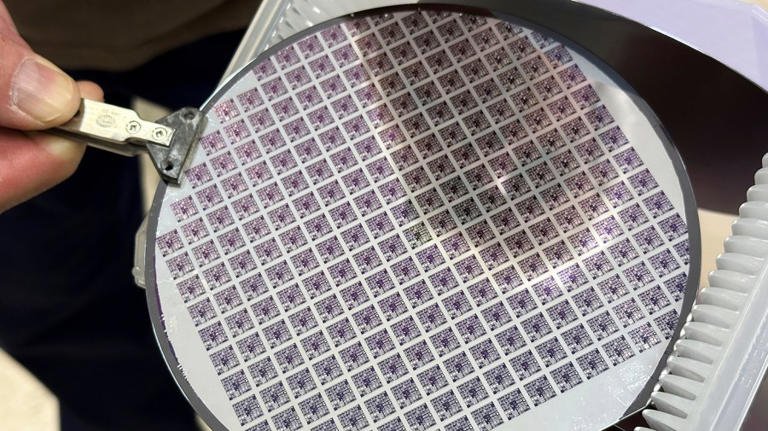
Taiwan has reached a trade agreement with the U.S., committing to a multibillion-dollar investment in American chip manufacturing in exchange for reduced tariffs, the Commerce Department announced Thursday.
As part of the trade deal, Taiwanese companies will invest at least $250 billion in building out advanced semiconductor, energy and AI capacity in the U.S. The government of Taiwan will also provide at least $250 billion in credit guarantees for additional investment.
In return, the U.S. will cap its “reciprocal” tariff on Taiwanese goods, including auto parts, lumber, timber and wood products, to 15 percent. Import taxes on generic drugs, aircraft parts and certain unavailable natural resources will also be reduced to zero percent.
Commerce Secretary Howard Lutnick said Thursday the goal is for the U.S. to “become self-sufficient in the capacity of building semiconductors.”
“We are going to bring semiconductors home to America,” Lutnick added. “That’s what this is. This is a $500 billion down payment.”
Taiwanese companies investing in U.S. chip production will also be exempted from some future Section 232 tariffs, or import taxes levied on products as deemed necessary to protect U.S. national security.
Under the agreement announced Thursday, Taiwanese firms building out new chip capacity in the U.S. will be able to import 2.5 times their planned capacity without paying these tariffs. Those who have completed chip projects in the U.S. will be able to import 1.5 times their planned capacity without tariffs.
The White House separately announced Wednesday that it was placing a 25 percent tariff on some advanced chips, including Nvidia’s H200 and AMD’s MI325X chips, following a Section 232 investigation.
However, it noted there would be exceptions for chips “imported to support the buildout of the U.S. technology supply chain and the strengthening of domestic manufacturing capacity for derivatives of semiconductors.”
SOURCE : BORDER REPORT