Humberto Gómez: President and General Director of Yokohama Tire de México
Q: How does Mexico contribute to Yokohama Rubber Company's global growth strategy and its long-term positioning in North America?
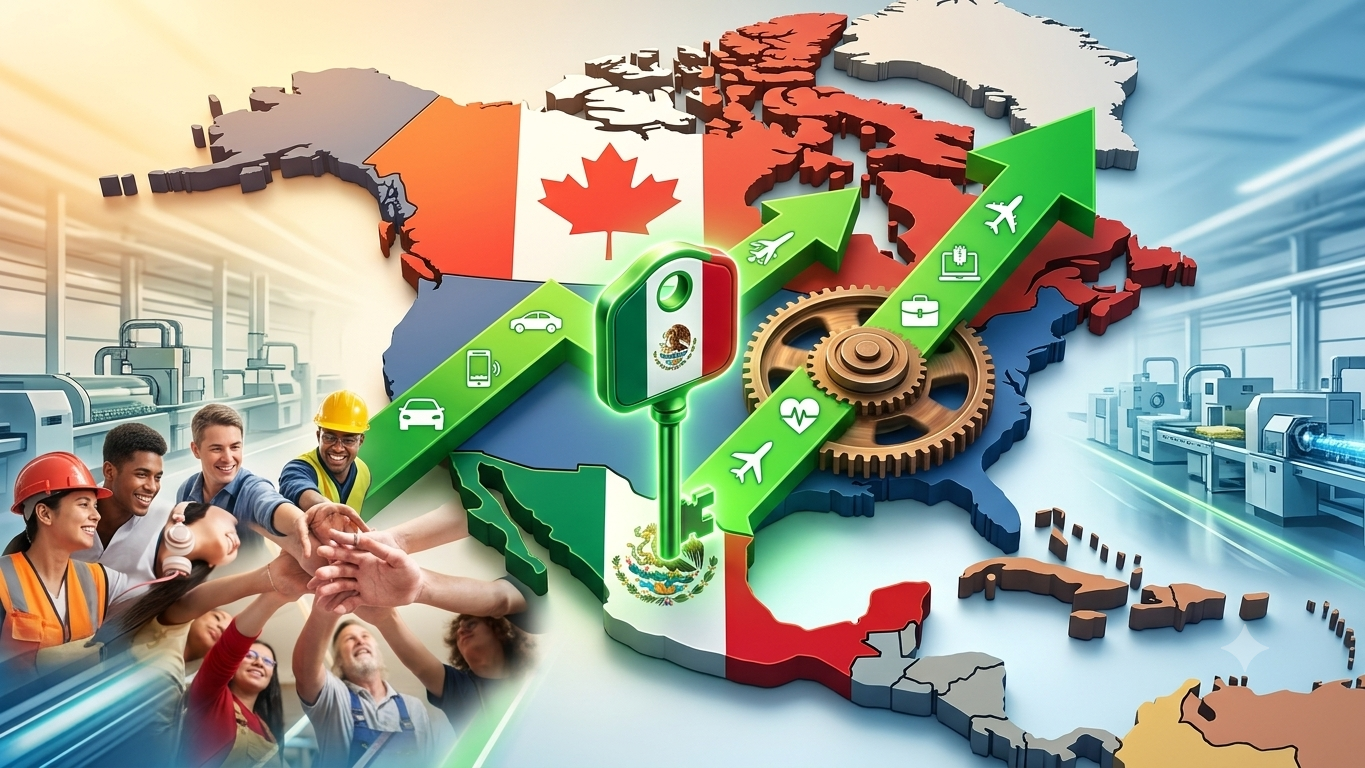
A: Mexico is a strategic market for Yokohama Rubber Company. With the construction of the manufacturing plant in Coahuila, we aim to strengthen our presence across North America, including Canada, the United States, and Mexico.
Thanks to its privileged geographical location, solid industrial capacity, and logistical connectivity, Mexico has become a key platform that allows us to efficiently meet the growing demand of the regional market, consolidating our strategic long-term positioning.
Q: What strategic factors influenced the decision to establish the new plant in Coahuila?
A: The decision is the result of a combination of operational, logistical, and market factors. First, it replaces the capacity of a former passenger and light truck tire plant in the United States that was no longer competitive due to technological limitations. This new plant in Mexico will be the most modern within the group, equipped with state-of-the-art technology to meet current efficiency and productivity standards.
Following global supply chain disruptions caused by the pandemic and the exponential increase in ocean freight costs from Asia, this plant reduces our dependence on external variables beyond our control. By producing locally, we secure the supply for Canada, the United States, and Mexico. The strategic location in Coahuila places us "across the street" from the United States, which optimizes distribution within the North American market. Furthermore, Yokohama Rubber Company deeply values the high level of specialization, responsibility, and quality of the Mexican workforce.
This is the corporation's first plant in Latin America and will be the only one of its kind in the entire American continent. From here, we will have the capacity to supply both the replacement and original equipment (OE) markets.
Q: How will the new plant help to change Yokohama Rubber Company strategy in the region?
A: Before 2013, the brand did not have an official presence in the country and was only marketed in a limited capacity through indirect imports from the United States. With the founding of Yokohama Mexico in 2013, we launched a formal effort that has allowed us to position ourselves as a premium tire company, achieving sustained double-digit annual growth. The supply for Mexico now comes from the Philippines, Thailand, and Japan; however, producing locally will grant us a massive competitive advantage by eliminating tariffs of up to 35% on certain products.
During these 13 years of operation in Mexico, we have consolidated brands such as Advan and Geolandar and developed a professional dealer network in the country that has been fundamental to our market penetration. We will continue importing certain types of tires; however, local manufacturing will enable us to further expand and strengthen our market presence, supported by a level of regional demand that fully justifies this investment.
Q: How do your flagship brands, such as Advan and Geolandar, reinforce your positioning in the country?
A: Advan is the company's global flagship and represents our Ultra High Performance (UHP) tire line. In our growth plan, both in Mexico and abroad, the core objective is to consolidate these two brands within the premium segment.
While Advan focuses on cars and light trucks that require peak technological performance, the Geolandar line is specifically designed for the SUV, pickup, and commercial van segments. Yokohama Rubber Company’s program diversifies into several lines ranging from standard and high-performance tires to top-tier ranges, ensuring that, through Advan and Geolandar, we can cover all the needs of the light and commercial vehicle market in the country with the highest quality.
Q: How has Yokohama Rubber Company adapted to the rapid development of tires for EVs, considering specific demands for weight, torque, noise reduction, and durability?
A: Although the growth rate of the EV segment has shown some stabilization recently, its relevance is undeniable and presents unique technical challenges. Unlike internal combustion vehicles, EVs are significantly heavier and generate much higher immediate torque, which requires a tire structure and compounds capable of withstanding such stress. It is fundamental to understand that what supports the vehicle's weight is not the tire itself, but the air it contains; therefore, we are designing tires that, regardless of size, can maintain high pressures to manage the additional load of the batteries.
Regarding acoustic comfort and efficiency, the absence of engine noise makes any rolling sound more perceptible. Additionally, the airflow entering the front of the vehicle generates turbulence around the tires, increasing both noise and rolling resistance. Yokohama’s advanced technology has focused on optimizing aerodynamic design to significantly reduce this turbulence. We have validated this engineering in environments as demanding as the legendary Pikes Peak race in Colorado, where we successfully tested our tires on a Tesla under extreme climbing and torque conditions. In conclusion, our strategy for the electric segment combines reinforced structural construction, high-durability compounds, and advanced aerodynamic design to respond to the needs of this new era of mobility.
Q: How do your research centers and proving grounds help address specific needs, such as road conditions in Mexico?
A: Our development structure is global but maintains a strategic regional focus. The technological nerve center originates in Japan, where our main R&D center is located. We have specialized proving grounds worldwide to simulate extreme conditions. In Hokkaido, northern Japan, and in Sweden, near the Arctic Circle, we evaluate performance in winter climates and constant rain, while in Thailand we operate a large-scale center for the needs of the Asian market. We also operate a testing center in Asia, as well as facilities at one of the world’s most challenging race tracks, known as the “Green Hell,” or Nürburgring, in Germany where our flagship UHP tire brand, Advan, is tested.
Yokohama Rubber Company has made a fundamental investment in the development center in Charlotte, North Carolina, which stands as the second most important outside of Japan. This center is dedicated exclusively to the North American market, and focuses on both the consumer segment (passenger and light truck) and the commercial segment (truck/bus). Its objective is to adapt our engineering to the particularities of the terrain and the requirements of original equipment manufacturers in North America, ensuring that the final product is capable of responding with durability and safety even under the most demanding infrastructure conditions, such as those frequently found on Mexican roads.
Tires must be designed to be robust enough to operate in various global markets, but there is also a rigorous technical selection process. For example, a model available in Japan might not be authorized for Mexico if it does not meet its specific demands. Each market requires particular tires: one for the Middle East must be designed to withstand extreme temperatures, while products for North America must balance durability and traction across varied infrastructures. Our job is to ensure that the portfolio in Mexico is appropriate for its roads.
Q: How does your new plant enhance efficiency, responsiveness, and sustainability within the supply chain?
A: Yokohama Rubber Company is radically transforming the use of raw materials. Most tire components — such as synthetic rubber, carbon black, and textiles like polyester or nylon — are petroleum derivatives. To mitigate this impact, the company is developing biomass to produce synthetic rubber from bioethanol and sugars, among other plant-based elements. This innovation is already a tangible reality: the tire used in the Pikes Peak competition with the Tesla vehicle was manufactured with this synthetic rubber derived from biomass instead of petroleum. Our strategy not only seeks a more agile supply chain closer to the North American market but also aims to lead the transition toward environmentally friendly materials, reducing dependence on hydrocarbons without sacrificing the high performance that characterizes the brand.
These actions are part of our global strategy. Yokohama Rubber Company's corporate goal is that, by the year 2050, 100% of the materials used in tire manufacturing will come from sustainable and eco-friendly sources. We are also committed to making all our plants worldwide carbon-neutral by 2030, drastically reducing atmospheric emissions. The new plant in Mexico is being designed and installed under these cutting-edge standards, ensuring that its operation is fully respectful of the environment and contributes to reducing our global carbon footprint.
Q: What are Yokohama Rubber Company’s supplier development standards, and how do you prioritize sustainability within your supply ecosystem?
A: Yokohama has a deeply rooted culture focused on environmental care. In Mexico, we apply rigorous global standards to ensure that our entire value chain and business partners share our environmental commitment. We work with the National Chamber of the Rubber Industry on projects of common interest, such as addressing the new Circular Economy Law.
Yokohama Rubber Company applies rigorous global standards to ensure that its entire supply chain shares our environmental commitment. In our commercial operations within Mexico, we audit service providers, such as the transport companies that distribute our tires throughout the country. These audits are not limited to logistical efficiency; they comprehensively evaluate sustainability, including social responsibility programs and compliance with regulations such as NOM-035 regarding psychosocial risks. At a corporate level, the goal is for our suppliers to evolve at the same pace as our global targets: achieving the use of 100% sustainable materials by 2050 and carbon neutrality across all our plants by 2035.
Q: What industry trends, technological shifts, and leadership priorities will define Yokohama Rubber Company’s success in Mexico over the next five to 10 years?
A: Over the coming decade, the company will focus on producing part of our portfolio locally and on evolving into a service-driven organization. In a market where price is highly competitive, our advantage will be the added value we provide through our service. Our corporate culture is fundamentally centered around our people. Over the years, we have worked diligently to develop a strong service-oriented quality culture and to evolve into high-performance teams. Our work culture, based on principles and values, is reflected in our motto: “With people, everything; without people, nothing.”
Having a plant on national soil will be decisive for expanding our presence in the Original Equipment market. Although we supply BMW plants in San Luis Potosi and Stellantis in Toluca with products imported from Japan, automakers demand local manufacturing to establish large-scale supply programs.
Beyond infrastructure, our strategic priority lies in a profound transformation of our organizational philosophy: we are evolving from a product-centered company to an entirely service-driven organization. We have full confidence in the quality of our tires, but we understand that in a market where mass-imported tires compete with prices that sometimes do not even cover raw material costs, our competitive advantage cannot be cost, but rather added value. Therefore, our long-term vision consists of strengthening our dealer network, making service the central axis of the operation. We are convinced that if we enable our business partners to grow through this exceptional service approach, the brand's growth in Mexico will be a natural consequence.
Q: What milestones does the company aim to hit by 2027?
A: By 2027, we expect Phase 1 of the Saltillo plant to be operating at full capacity in the production of passenger car and light truck tires. Additionally, it is important to highlight that Yokohama has been expanding its operations through new investments and strategic acquisitions, including the 2025 acquisition of Goodyear’s giant OTR tire business. These strategic investments position Yokohama as one of the leading players in the global off-the-road (OTR) tire segment.
In Mexico, growth in the OTR segment will entail an additional investment of approximately US$115 million, as it has already triggered the start of Phase 2 of the plant in Coahuila this year. This phase will enable the production of giant OTR, industrial, agricultural, and construction tires.
Yokohama Tire Mexico, a subsidiary of Japanese Yokohama Rubber Company, manufactures tires for many vehicle categories including compact cars, sports cars, sedans, and construction equipment. The company operates in over 120 countries and employs more than 22,000 people worldwide. In Mexico, the company operates from Queretaro and focuses on innovation, manufacturing, and commercial activities.
https://mexicobusiness.news/automotive/news/mexican-manufacturing-key-expand-north-american-footprint