Septmber 8, 2026.
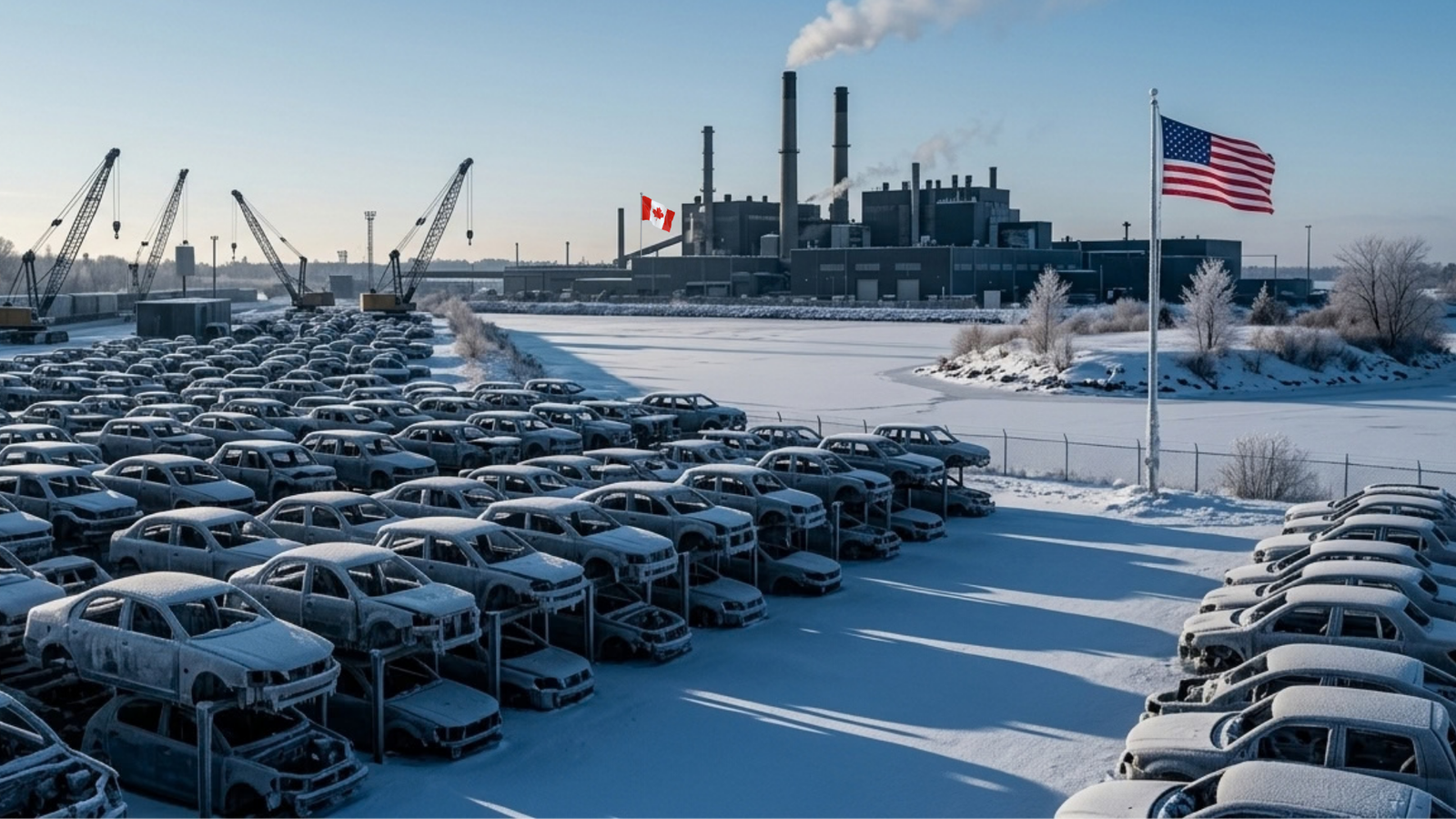
Canada escalated its trade dispute with the U.S. by imposing tariffs on $20 billion worth of American goods, including steel and aluminum, in retaliation for U.S. tariff threats. This move significantly impacts the highly integrated North American auto industry, creating immense uncertainty for automakers and suppliers. Experts warn that the tariffs are freezing investment decisions and forcing companies to prioritize certainty over cost, potentially leading to delayed or redirected capital. The escalating trade war also complicates ongoing labor negotiations in Canada, where unions seek investment commitments from U.S. automakers. Companies are now compelled to re-evaluate their cross-border production strategies amidst a challenging environment compounded by labor, land, and geopolitical issues.
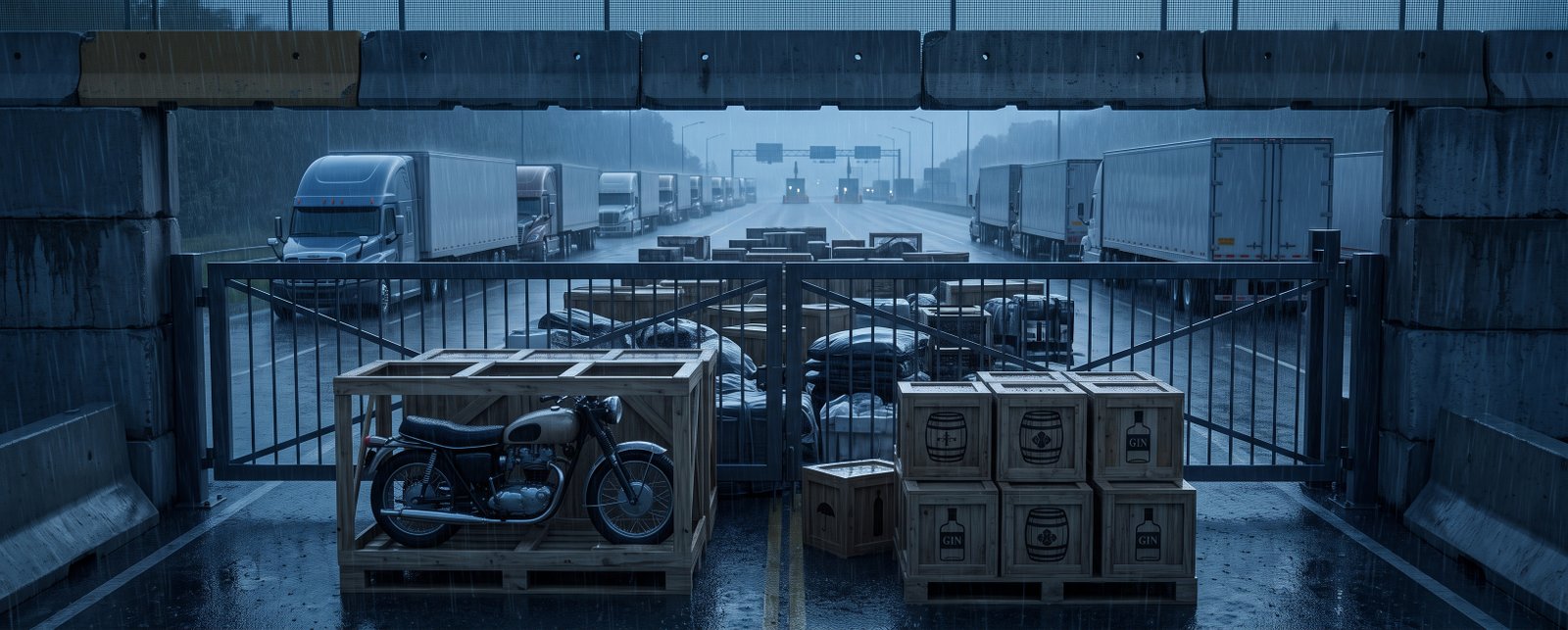
Canada threw the latest punch in the escalating trade war with the United States on Tuesday, placing tariffs on about $20 billion worth of American imports. The levies range from 15% to 50% on products that include steel and aluminum, key components of auto production. It all comes as automakers and suppliers on both sides of the border consider where to produce and source vehicles and the parts needed to build them. Those decisions are not getting any easier.
'You’ve got intermediate production and tier one, tier two suppliers that are on both sides of the border, so products are going back and forth,'
said Didi Caldwell, president and CEO of site selection consultancy Global Location Strategies, in an interview. 'So it’s one of those situations where, at least in the short term, it’s freezing a lot of the investment that might otherwise be taking place because the ground is so uncertain at this point.' Michigan-based Center for Automotive Research, or CAR, echoed the same conclusion in a report, which noted, 'Further tariff escalation adds another significant source of uncertainty to capital decisions that require years of planning and substantial financial commitments. Rather than immediately shifting production from Canada to the United States, companies may pause or delay investment, scale back plans, or redirect capital elsewhere until the rules governing North American trade become clearer.'
Canada’s move comes in response to President Donald Trump placing a 50% tariff on $27.6 billion in goods imported from Canada and his threat to double the tariff on autos imported to 50% on Jan. 1, 2027. It also comes as the union representing Canadian auto workers is in the final stages of contract negotiations with the Detroit Three automakers, pushing to extract promises of new investments and production at vehicle assembly plants in Canada, some of which are currently idle. Thus far UNIFOR has won a renewal of a no-closure agreement and program commitments at all Canadian Ford Motor Co. facilities.
From General Motors Co., the union secured a commitment to invest $1 billion across factories the province of Ontario and placing the currently idled CAMI plant in Ingersoll, Ontario, for 'priority consideration on potential Canadian Armed Forces defense contracts.' The union is currently in contract talks with Stellantis and is pushing the automaker that produces Chrysler, Dodge, Ram and Jeep brands, among others, to reverse a decision to relocate production of a new Jeep Compass to the U.S. and possibly close and sell the plant. It brings up the question of how U.S. automakers can abide by any such commitments to continue producing in Canada given the escalating trade war between the countries.
'You can negotiate these investment contracts, but that does not isolate that investment from the underlying economics of a specific location,' observed Caldwell. 'At the end of the day, if a project is not economically viable, then it either will not get off the ground or it will start and then it will fail.' The relationship between the U.S. and Canadian auto industries cannot be overstated. The U.S. exported about $30 billion in auto parts to Canada while importing around $20 billion in parts from that nation—a roughly $10 billion U.S. motor vehicle parts trade surplus, according to the CAR report.
At the same time in 2024, according to the report, more than 53% of the value of Canadian light vehicle exports originated in the U.S. Time is not on the side of automakers and suppliers where production decisions can be costly and long-lasting. Indeed, Caldwell cautions they cannot simply put plans in neutral while hoping for policy changes once Trump leaves office in 2029. 'I think they have been waiting as long as they can, and I think now we’re at the point where they’re going to have to pivot,' she declared. 'Maybe not everywhere across the board all at once, but they are having to pivot and think about, okay, where’s my next round of capital decisions going to happen, and thinking about how many times does that solution require me to cross the border, and that is a measure of how exposed I am.' If the U.S.-Canadian trade war was all the North American auto industry had to worry about, that would be bad enough.
Add to that ongoing issues related to labor, land availability and overall geopolitics and decision making by automakers and suppliers is under extreme duress. The trade war is just one more thing making a challenging environment even more so. 'I don’t want to say a death by a thousand cuts, but it is just adding insult to injury as they’re trying to make plans,' declared Caldwell. 'Now that we’re in such an uncertain environment, that companies are instead of chasing the lowest cost, they’re chasing the highest certainty, and automotive companies right now are no different.'
Author: Ed Garsten