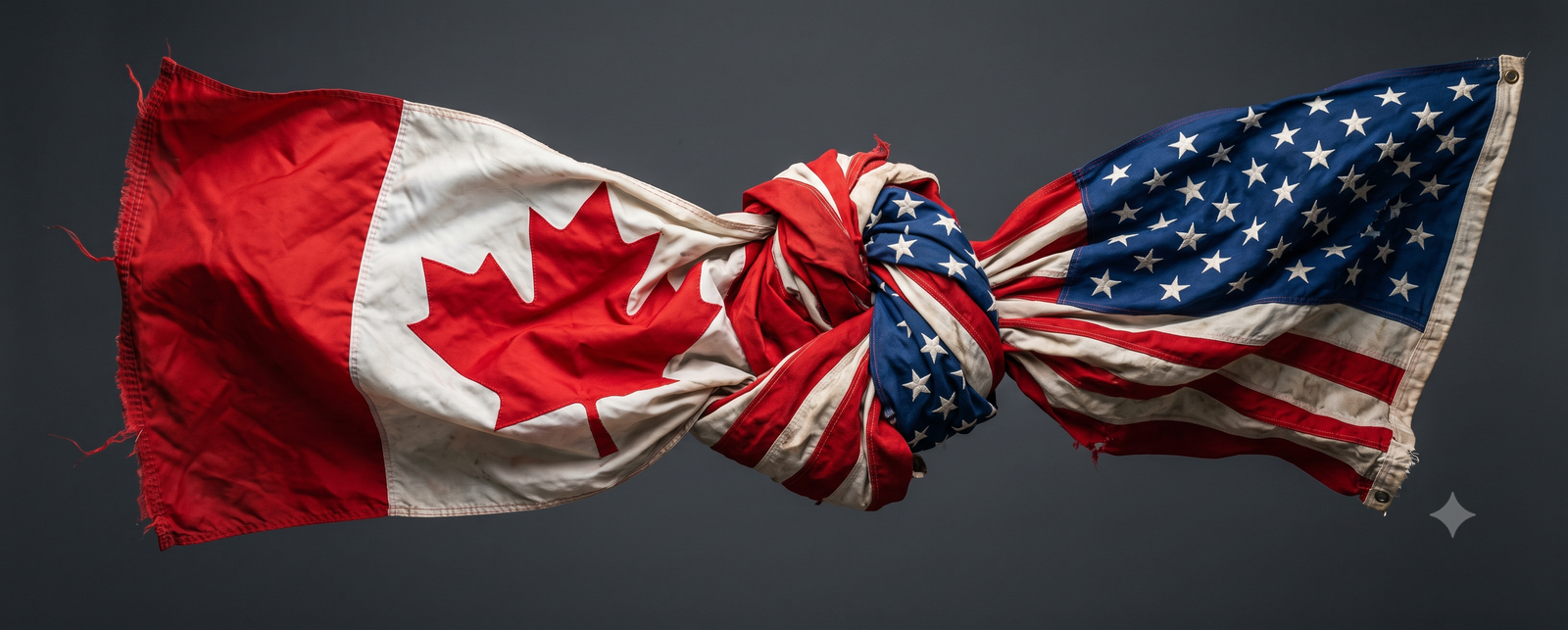
President Donald Trump authorized the imposition of 50% tariffs on Canadian products, citing the need to counter unfair advantages and the negative impact on local producers in the alcohol, automotive, and dairy sectors.
To execute this move, the U.S. president invoked a rarely used legal mechanism: Section 338 of the Tariff Act of 1930. This provision grants the Executive branch extraordinary powers to unilaterally sanction nations that implement trade regulations or practices deemed discriminatory against U.S. interests. Affected goods and decree exceptions The package of tariff restrictions substantially alters the flow of goods traded under the North American free trade agreement (USMCA).
The final framework establishes the following operational conditions: Taxed goods: Automotive sector products, dairy products, and alcoholic beverages originating from Canada. Strategic exclusions: Energy sector imports, potash shipments, and goods subject to specific duties previously defined by sector. Background and diplomatic tensions
Since returning to the White House last year, President Trump has implemented broad tariffs against various global partners; however, goods from the USMCA bloc had generally remained protected by far-reaching exemptions. This new measure breaks that pattern and threatens to strain bilateral relations between Washington and Ottawa.
Brazil prepares retaliation against the EU over new Trump tariffs Greer praises Mexico regarding USMCA negotiations but demands a reduction in the deficit This announcement marks the second recent point of friction between the two administrations, following the U.S. president's threat to impose economic sanctions over environmental damage caused by smoke from Canadian wildfires drifting into U.S. territory.
50% levy on many Canadian goods imposed under a 1930 law that no president has used before
U.S. President Donald Trump is imposing new tariffs on Canadian exports under a section of law that has never been used since it was put on the books in 1930.
The unprecedented nature of Trump's move raises the possibility it will face a court challenge — not by Canada, but by a U.S. importer forced to pay the new 50 per cent tariffs.
However, if the tariffs actually come into effect and are challenged in court, it's anything but certain that such a legal case would succeed, according to experts in trade law.
Is Trump on more solid legal ground?
The legislation Trump is using explicitly gives the president the power to impose tariffs of up to 50 per cent on goods from a foreign country that has engaged in trade practices that discriminate against the U.S.
Trump's proclamations announcing the tariffs clearly lay out the case that Canada has done just that, says Simon Lester, a non-resident fellow of Rice University's Baker Institute for Public Policy.
"I think it would be difficult to bring a successful challenge in U.S. court," Lester said Tuesday on his international economic law and policy
Lester and other trade law experts say Trump appears to be on more solid legal ground than he was with the tariffs that were ultimately struck down by the U.S. Supreme Court in February.
The new tariffs are based on Section 338 of the U.S. Tariff Act of 1930, also known as the Smoot-Hawley Tariff, named for the Republican lawmakers who sponsored the Depression-era bill.
Is Canada putting the U.S. at a disadvantage?
Section 338 is focused on "discrimination by foreign countries," defined as when a trading partner takes any actions that "place the commerce of the United States at a disadvantage."
Trump's proclamations say Canada is putting the U.S. at a disadvantage in three ways:
- Banning the import and distribution of U.S. alcohol products in eight provinces.
- Limiting U.S. dairy products access to the Canadian market.
- Capping certain U.S. vehicle exports to Canada.
While Canadian officials might argue that the actions are justified as retaliation against Trump's launching the trade war, Lester says the law says nothing about justifiable discrimination.
"If discrimination exists, the President can impose tariffs under Section 338," he wrote.
John Veroneau, a former deputy U.S. trade representative now with the D.C. law firm Covington & Burling LLP, says Section 338 has fewer limitations and procedural requirements than other tariff laws.
"I suspect it may well be challenged if, in fact, the tariffs go into place," Veroneau told CBC News Network on Tuesday.
How successful that challenge would be, he’s not yet sure.
Are Trump's new tariffs just a negotiating tactic?
The new 50 per cent tariffs are due to kick in on Aug. 19, under the terms of the proclamations issued by Trump.
Veroneau says he hopes they won't actually take effect, but are instead just being proposed by Trump to gain negotiating leverage in trade talks with Canada.
Nicolas Lamp, an associate professor in the international law program at Queen's University, says he believes the tariffs are a negotiating ploy aimed at eliminating Canada's leverage with the U.S.
He says that's why those who are affected by the tariffs may not try to fight them in court.
"Any importer who might think about challenging them will probably not want to waste their money," Lamp told CBC News.
ABOUT THE AUTHOR


Yes Canada should stand firm, if Trump wants to in flick pain on Canada then Canada should do the same. Trump don't care about the Canadian people or his own citizens all he's doing is lining his pockets and making everybody pay for it, he needs to go!!!