.png)
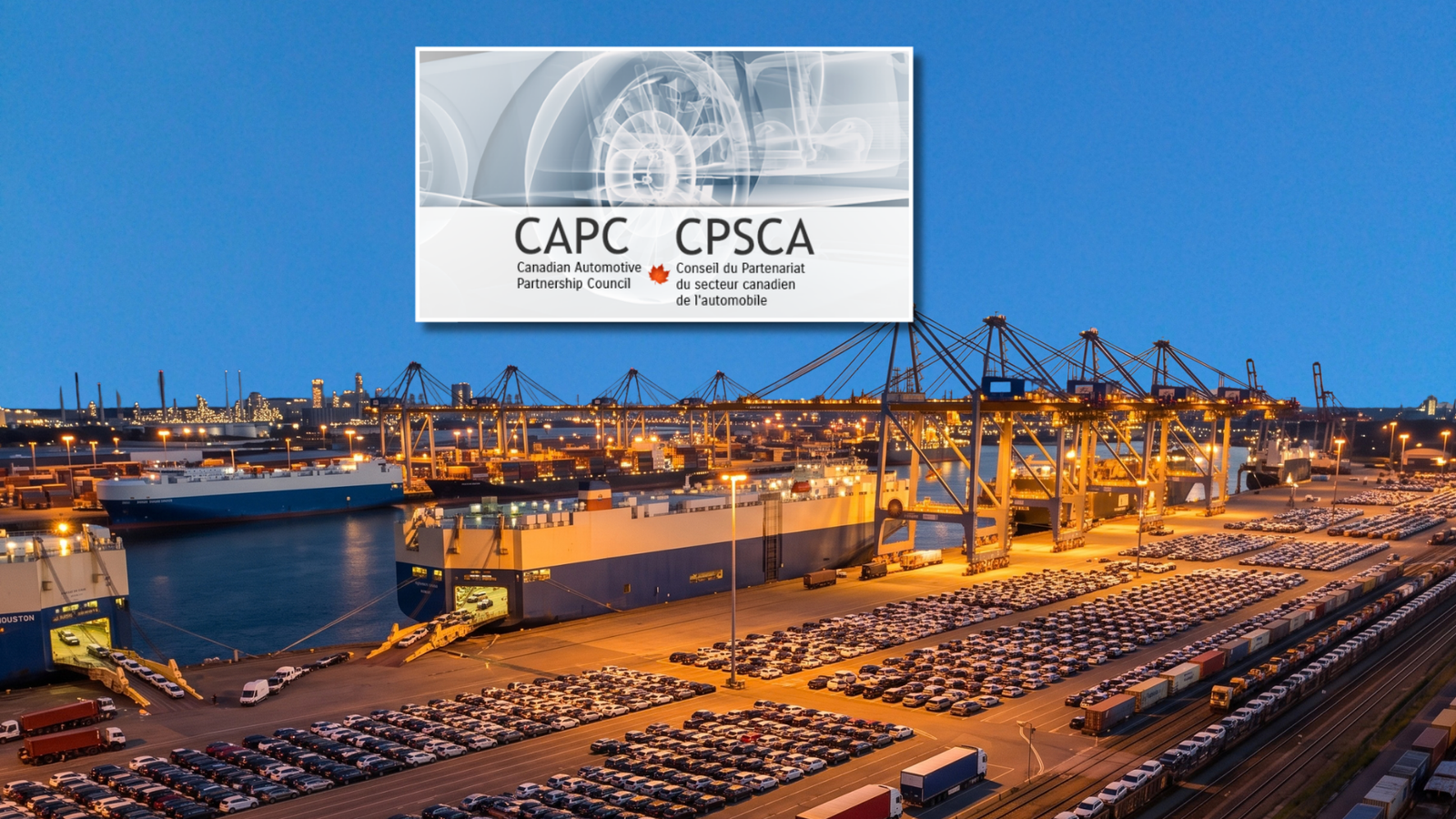
MEXICO CITY, July 1 (EL UNIVERSAL) – With the start of the first joint review of the United States-Mexico-Canada Agreement (USMCA), the three major U.S. automakers—General Motors, Ford, and Stellantis—called for a swift and lasting resolution that guarantees a level playing field with countries that pay lower tariffs to export vehicles to the U.S. market.
The president of the American Automotive Policy Council (AAPC), Matt Blunt, issued a statement mentioning that North American economic integration offers enormous competitive advantages for the region, and U.S. automakers are encouraged by the ongoing negotiations between the United States, Mexico, and Canada.
However, U.S. automakers are at a disadvantage compared to vehicle imports from countries whose exports are subject to a flat 15% tariff and lack a comparable rule of origin.
"We urge a swift and lasting resolution that ensures a level playing field and provides the long-term certainty needed for investments in the automotive sector, which require significant capital investment," Blunt stated.
The U.S. does not want to renew the USMCA
On July 1, the United States announced its intention not to renew the trade agreement in its current form. The treaty is expected to remain in effect until 2036, with a process of annual reviews.
Currently, automakers based in Mexico and Canada that export vehicles to the United States and comply with the USMCA's rules of origin pay a 25% tariff, and the value of the U.S. content is deducted.
Vehicles that do not meet the USMCA rules of origin are subject to a 25% tariff plus a 2.5% most-favored-nation tariff.
Conversely, vehicles exported from Korea, Japan, and Germany to the United States are subject to a 15% tariff without having to comply with any rules of origin.
AAPC represents US automakers Ford, General Motors, and Stellantis, and is headquartered in Washington, D.C.
"USMCA, a resounding success for the US auto industry"
Meanwhile, the Alliance for Automotive Innovation, the American Association of International Automobile Dealers, Autos Drive America, MEMA, the Vehicle Suppliers Association, the National Association of Automobile Dealers, and the Zero Emission Transportation Association called for an extension of the USMCA.
MEXICO CITY, July 3 (EL UNIVERSAL) – The announcement that Washington will not extend the United States-Mexico-Canada Agreement (USMCA) until 2042, meaning it will only be in effect until 2036, did not generate volatility in financial markets because analysts had already anticipated this possibility, according to México ¿Cómo vamos?
In the special publication "The USMCA Remains in Effect," the organization stated that "the start of annual reviews was a scenario anticipated by analysts. Therefore, variables sensitive to episodes of volatility and investment decisions associated with interest rate differentials, such as the exchange rate, did not register a negative reaction to the United States' announcement."
He explained that on the day of the virtual meeting between Mexico's Secretary of Economy, Marcelo Ebrard, the United States Trade Representative (USTR), Jamieson Greer, and Canada's Minister of Intergovernmental Affairs, Dominic LeBlanc, responsible for trade between Canada and the United States, there were no significant drops or worrying movements in the stock market or the peso-dollar exchange rate.
For example, on July 1, the FIX exchange rate was 17.54 pesos per dollar.
He added that "the announced annual review underscores the importance of North American production integration, which is a reality in the region's production chains."
For example, "the integration of the agri-food industry exemplifies the complementarity among the three countries and is a pillar of regional food security."
Data shows that Mexico is the United States' most important agricultural trading partner. It is its main export market and also its largest supplier of agricultural products. In 2023 alone, 51% of all fresh fruit available in the United States came from Mexico, and for fresh vegetables, the figure rose to 69%.
Key issues for Mexico in the upcoming negotiations
Mexico's government is seeking to reduce tariffs affecting specific sectors. It also wants to protect the access its agricultural products already have to the U.S. market. Another important point is maintaining current rules of origin, because they help strengthen regional production without compromising the competitiveness of integrated supply chains.
Meanwhile, the United States prioritizes reducing its trade deficits and bringing more manufacturing production and jobs back to its territory.
It has proposed stricter rules of origin to prevent companies from countries outside the region from indirectly benefiting from the USMCA.
For Canada, the challenge is to maintain its preferential access to the U.S. market, defend its supply management system in the dairy sector, achieve tariff reductions in certain sectors, and resolve disputes related to digital services.
The United States' decision not to immediately extend the United States-Mexico-Canada Agreement (USMCA) does not alter the favorable outlook for Mexico, as the agreement will remain in effect until 2036 and the country retains a competitive advantage over other trading partners of the U.S. economy, according to an analysis by BBVA Research.
The bank's economic research department explained that Mexican exports that comply with the USMCA's rules of origin continue to have tariff-free access, making it the only trade agreement that has remained exempt from the general tariffs imposed by the current U.S. administration. Furthermore, Mexico maintains one of the lowest levels of trade protection among the United States' main trading partners, which preserves the competitiveness of its products in the U.S. market.
BBVA noted that the decision by the Office of the United States Trade Representative (USTR) not to confirm a 16-year extension to the trade agreement aligns with its baseline scenario and does not represent a termination of the agreement or an automatic renegotiation. On the contrary, it opens a period of annual reviews in which the three countries can agree at any time to an extension before 2036.
Mexico, Strategic for the United States
The bank highlighted that markets had already anticipated this outcome, since after the July 1 announcement there were no significant movements in the peso-dollar exchange rate or in Mexico's country risk measures, suggesting that investors had priced in the continuation of the agreement under a prolonged negotiation process.
According to BBVA Research, Mexico also maintains a strategic position for the United States. Mexican exports to the U.S. market grew 5.8% in 2025, solidifying the country's position as the United States' main trading partner and the source of more than 15% of its merchandise imports.
The productive integration between the two economies, especially in sectors such as automobiles, electrical equipment, medical devices, machinery, and advanced manufacturing, reduces the likelihood of an abrupt breakdown of the agreement.
In this context, BBVA considered the most probable scenario to be the continuation of the USMCA and its fundamental benefits, albeit under an environment of greater political and regulatory uncertainty stemming from the annual reviews.
For the bank, the main cost for companies and investors would not be the loss of preferential access to the U.S. market, but rather the persistence of trade and regulatory uncertainty in the coming years.
The U.S. Trade Representative has added several issues to the agricultural agenda for negotiations with Mexico as part of the annual review of the United States-Mexico-Canada Agreement (USMCA).
Among these issues are restrictions on exporting Mexican fruits and vegetables to the U.S. market during certain seasons, a phenomenon known as "seasonality," according to the Agricultural Markets Consulting Group (GCMA).
They are calling for strengthened sanitary and phytosanitary measures, especially following cases of screwworm in Mexican livestock, a pest that has now reached the U.S.-Mexico border.
To address this issue, the consulting firm proposed creating a "sanitary union" to harmonize procedures, inspections, certifications, and emergency protocols, and to recognize the authorities.
They seek to streamline and modernize customs to make the crossing of goods more efficient. GCMA asserted that this would be achieved through a customs union among the three USMCA countries.
They propose improved competitive conditions in the grain trade, given that the United States is the main supplier of corn to the Mexican market. Therefore, they also revisited Mexico's objections to genetically modified corn and biotechnology.
They also propose addressing soil sustainability, raising the issue of ensuring certain working conditions for agricultural workers, preventing forced labor, and adhering to environmental regulations.
"From GCMA's perspective, Mexico must maintain a firm stance on issues that directly affect the sector's competitiveness. In particular: rejecting seasonality mechanisms, as these are incompatible with the free trade established by the United States-Mexico-Canada Agreement (USMCA)."
In the event that the United States applies seasonal tariffs, they ask the Mexican government to "consider applying equivalent measures on products highly sensitive to the United States, including corn, high-fructose corn syrup, pork, chicken, and other strategic products."
They believe Mexico should consider, in its proposals to the United States, eliminating the suspension agreements applicable to Mexican tomatoes.
They suggest seeking a more balanced system for sugar trade, through a quota similar to the volume of high-fructose corn syrup that the United States exports to the Mexican market.
Another objective of the Mexican government should be to reopen the border to the export of live cattle in those regions of Mexico where there are no cases of screwworm.
https://es-us.finanzas.yahoo.com/noticias/automotrices-eu-piden-igualdad-condiciones-164428386.html