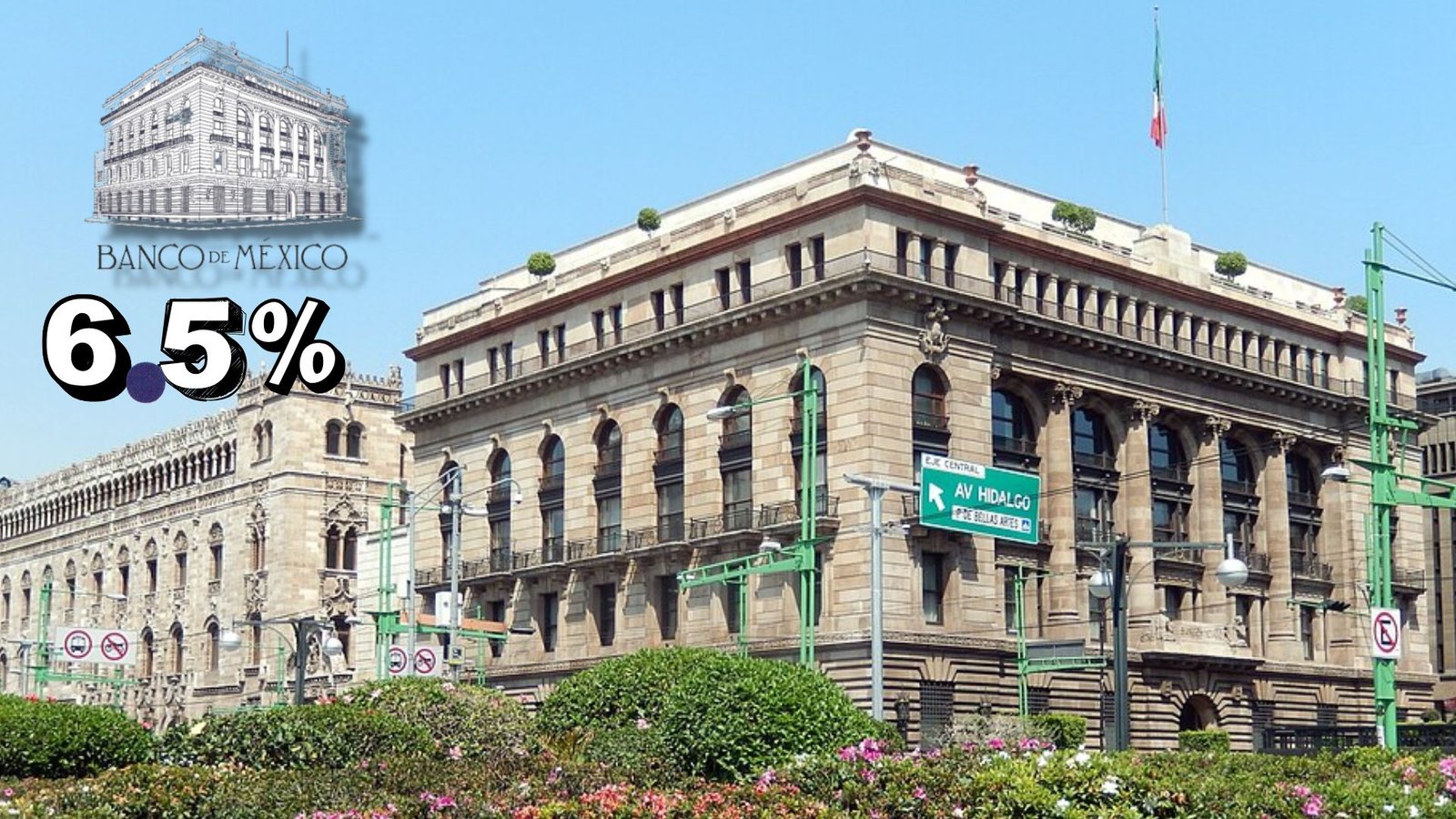
Banco de México. 25 junio 2026. Comunicado de Prensa. In the second quarter of 2026, global economic activity is projected to have expanded at a similar pace to the previous quarter. In some major advanced economies, headline inflation continued to rise, largely due to higher energy prices, while core inflation varied across countries. The Federal Reserve left the federal funds rate range unchanged at its June meeting.
International financial markets showed volatility, and commodity prices mostly declined. The dollar strengthened. US government bond yields increased across most maturities. Uncertainty persists regarding the conflict in the Middle East and its repercussions, although recent negotiations point toward a resolution. Since the last monetary policy decision, Mexican government bond yields have decreased across most maturities. The Mexican peso depreciated. The economy is expected to expand in the second quarter of 2026, following the contraction of the previous quarter. Slack conditions are still expected throughout the forecast horizon, and significant downside risks to economic activity persist. Between April and the first half of June, headline inflation decreased from 4.45% to 3.55% as a result of declines in both core and non-core inflation. Core inflation fell from 4.26% to 4.12% during that period.
Headline inflation expectations for the end of 2026 showed a marginal decrease. Longer-term expectations remained relatively stable at levels above the target. The headline inflation forecast was revised downward for the second quarter of 2026 due to lower-than-expected levels for non-core inflation during that period. Those for core inflation were revised slightly upward between the second and fourth quarters of 2026. Headline inflation is still expected to converge to the target in the second quarter of 2027.
Forecasts are subject to various risks. Upside risks include: i) disruptions from trade policies or an inflationary impact from geopolitical conflicts; ii) persistent core inflation; iii) weather-related impacts; iv) cost pressures; and v) a depreciation trend in the Mexican peso. Downside risks include: i) weaker-than-expected economic activity in Mexico and/or the United States; ii) less pass-through of cost increases; and iii) less pressure from the appreciation of the Mexican peso since last year. The balance of risks to the projected inflation path over the forecast horizon is considered to remain tilted to the upside. The changes in economic policy by the US administration and the potential prolongation of geopolitical conflicts continue to add uncertainty to the forecasts. Their effects could lead to inflationary pressures on both sides of the balance sheet.
The Governing Board assessed the inflation outlook. It considered the observed exchange rate levels, the absence of demand pressures in the economy, and the degree of monetary tightening implemented.
2 Thus, with all its members present, it unanimously decided to maintain the target for the overnight interbank interest rate at 6.50%.
Looking ahead, the Governing Board believes it will be appropriate to maintain the benchmark interest rate at its current level. It judges the monetary stance to be adequate to address the challenges of the macroeconomic environment, including those stemming from the international context. The Central Bank reaffirms its commitment to its primary mandate and the need to persevere in its efforts to consolidate a low and stable inflation environment.
Source: INEGI for observed data on the annual variation and Bank of Mexico for seasonally adjusted figures and forecasts.
https://www.banxico.org.mx/publicaciones-y-prensa/anuncios-de-las-decisiones-de-politica-monetaria/%7BF6667DDE-E87D-68A3-0EBB-A4DF9048E403%7D.pdf

.png)